CHANGING GIMMICK
Or how a forgotten stoner rock band turned into Powerwolf.
Since forming in 2004, Powerwolf have become one of the most recognisable names in European metal, with a carefully cultivated image that’s almost as important as the music itself. Whether you like them or not (they are not exactly my cup of tea), there’s no denying they have built a remarkably successful career around a distinctive combination of theatrical horror imagery, religious symbolism, church organs and recognisable heavy metal anthems.
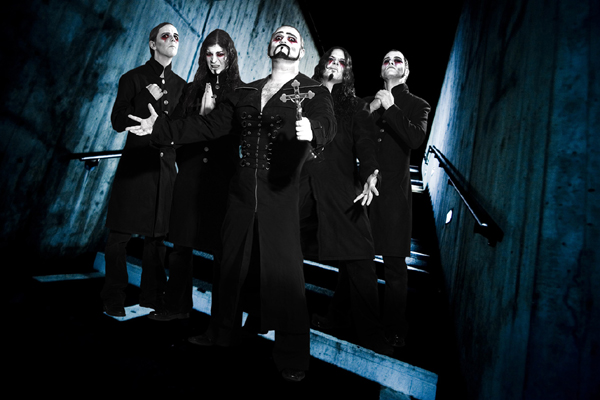
What’s unbeknownst to most is that, before becoming Powerwolf, the musicians had already spent years playing together in a completely different context. Their previous incarnation was Red Aim, a German stoner rock band whose records appeared on established labels such as People Like You and Metal Blade, the latter also responsible for Powerwolf’s early releases. Despite this, you won’t find Red Aim’s catalogue on major streaming services. Could this absence be a deliberate attempt to distance themselves from their past musical identity? Perhaps.
It’s not unlike professional wrestling, where a performer, for various reasons, can adopt a completely new character (ie, a “gimmick”) and everyone is expected to pretend that their previous incarnation never existed.
Powerwolf have traditionally been rather vague about their past, even in recent times, when a few clicks online can easily reveal every kind of detail. I remember interviewing guitarist Matthew Greywolf around the release of their second album, ‘Lupus Dei’ (2007), and asking him about the band’s origins. He quickly brushed the subject aside: “The wolves gathered in 2004 and then they went out on tour”.
He also gave me a rather elaborate account of singer Attila Dorn’s supposed Romanian origins: “Since joining us, he has been living mainly in Germany. He occasionally returns to his homeland, but by now he spends almost all his time here. Much of his family was already living in the area, so moving here wasn’t a problem for him at all”.
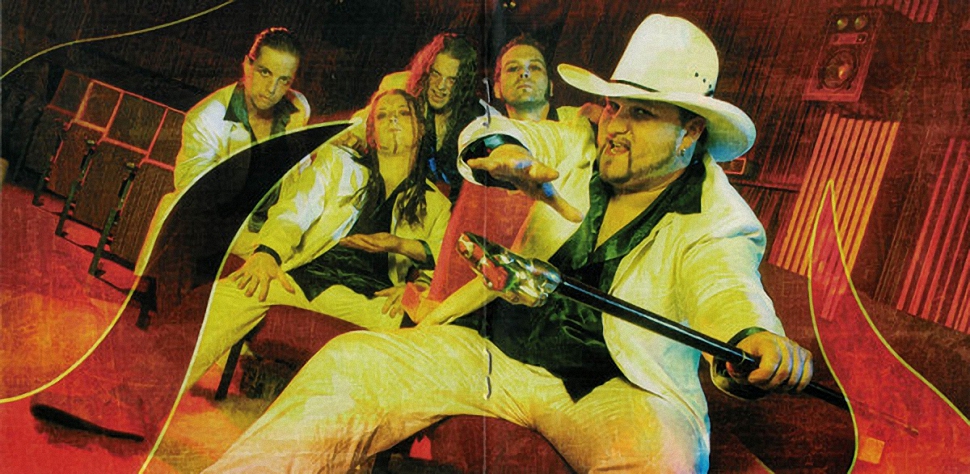
Of course, for a band built around such a spectacular, horror-inspired image, it’s far more exciting to claim that your singer comes from the land of Dracula than to admit that he used to call himself Dr. Don Rogers and wore cowboy hats while singing songs like ‘Kneel Down And Blow For Forgiveness’. If that’s not enough, their original drummer, known in Powerwolf as Stéfane Funèbre and a member of the band until 2009, went by the name Mitch Buchanan, just like David Hasselhoff’s character in ‘Baywatch’! I guess you could say they had plenty of reasons to repackage themselves.
But some of Red Aim’s music was actually pretty good, and it would be a shame to let it disappear into obscurity.
Their self-released debut, ‘Sinai Jam’ (1996), still featuring original singer Pascal Flach, offered an intriguing half-hour of space raga-infused rock excursions and relatively lengthy compositions. If not necessarily their finest work, it’s certainly their least conventional and easily my favourite.
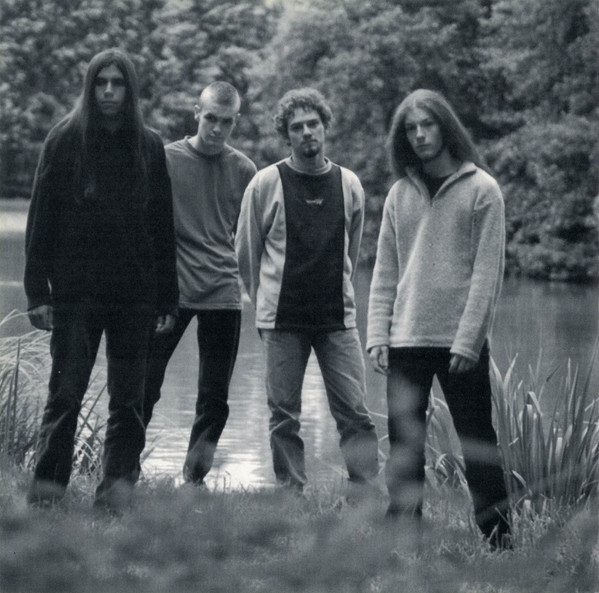
The arrival of Karsten Brill, better known today as Attila Dorn, also marked the beginning of a new chapter. Brill had previously sung in Dragons Tongue, with whom he’d recorded a post-grunge-flavoured album. Red Aim subsequently signed to People Like You and released ‘Call Me Tiger’ (1999), which included reworked versions of songs from their earlier self-released EP ‘Orange’.
The music became tighter and more straightforward, with shorter songs recalling the likes of Spiritual Beggars and similar stoner rock outfits. This would remain the band’s general direction on ‘Saartanic Cluttydogs’ (2001), with an increasingly pronounced affection for 1970s-style heavy rock and hard rock in general. Their next album, ‘Flesh For Fantasy’ (2002), even included a cover of Scorpions’ ‘Rock You Like A Hurricane’.

By the time of ‘Niagara’ (2003), their fifth album and second for Metal Blade, Red Aim had expanded to a five-piece with the addition of Hammond organist Ray Volver, now known by his real name, Falk Maria Schlegel.
Almost as if foreshadowing what was to come, the liner notes in the booklet end with “This album is respectfully dedicated to Bela Lugosi”. Out went the stoner rock, cowboy hats and tongue-in-cheek stage names; in came werewolves, gothic imagery and a completely different musical identity.
Now, I’m not saying you should prefer Mean Mark Callous to The Undertaker, but sometimes scrapped gimmicks deserve a reassessment…