BEFORE EVERYTHING WENT DJENT
Hacride – Amoeba (2007)
Unvinyl #10
There was a moment, sometime in the mid-to-late 2000s, when anything even remotely technical in metal became the new hot topic. Endless polyrhythms, cold precision, guitars with more strings than philarmonic orchestra, bands trying to out-Meshuggah Meshuggah without really understanding what made them work in the first place. Some were just randomly throwing ideas at the wall, complexity for complexity’s sake; others actually tried to find a personal way through the ocean of technically flawless musicians. They were setting the rules of what we now know as djent.
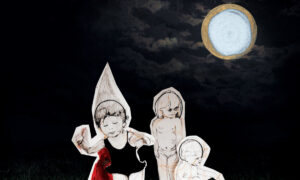
‘Amoeba’ (Listenable Records), the second album by French outfit Hacride, remains one of my favourite expressions from those embryonic years.
At the time, it was easy to point to the obvious reference points — that early-2000s Meshuggah strain of “futuristic” thrash/death — but the band pushed beyond that framework. Their songwriting included progressive elements, occasional post-core detours, and even more unexpected turns, like the warped flamenco exercise of ‘Zambra’, originally by Ojos De Brujo.
More importantly, all of this was delivered with a sense of immediacy that’s often missing in this kind of music. ‘Amoeba’ was complex, sure, but it never felt like it was trying to show off: just a band willing to explore their possibilities and find a personal voice. When I spoke with guitarist Adrien Grousset around that time, the intent was pretty clear: “Originality”, he said, almost as a mantra. Much of that came from looking outside metal in the first place: “I worked quite a lot on South American music — bossa nova, samba — and Hispano-Arabic traditions like flamenco or Maghreb music. I think the strength of the band comes from being open to different musical cultures”.

That openness indeed helped give ‘Amoeba’ its identity. Grousset described Hacride as a “progressive” band not in the usual sense of the word, but in the idea of constantly adding something personal to the experience. Or, more simply: avoiding clichés at all costs. It paid off. Unlike many records in this field, ‘Amoeba’ wasn’t put together as a loose collection of ideas. “It was intended to be something that could be listened to as one long piece”, the guitarist explained. Each song was written with a specific feeling in mind and placed carefully within the overall structure.
As Grousset’s words suggest, they felt a little contrived within the metal framework: “We strive to avoid being associated with metal as an entity with a capital M”, he said. “We’re simply making music”. It’s a telling statement, especially considering what would happen shortly after. As the years went by, the whole djent wave would rise and, in many ways, standardise the very language bands like Hacride had been bending.
Hacride kept moving. They released a few more records – their last new music dates back to 2017 – and refined their sound, though never achieving the wider recognition earned by fellow French band Gojira, who explored fairly similar territory. ‘Amoeba’ remains my favourite from them, because it’s the kind of work that fascinates me. Released at a moment when the genre was not a genre yet, before any set of rules became commonplace and mostly turned something that was born out of the opposite idea into a formula.
CHANCES OF VINYLIZATION: Unknown, but not impossible. Listenable is known for releasing a lot of vinyl reissues, so ‘Amoeba’ might receive the well-deserved treatment sooner or later. At 54 minutes in length, it might require a 2-LP set, perhaps at 45 rpm or with some bonus tracks.
🟥 Unvinyl is a series of articles about great music not available on vinyl (at the time of writing). A full index can be found here.