HAD CHAD NOT BOUGHT THAT RECORD…
Nirvana – The Man Who Sold The World (1994)
Song Story
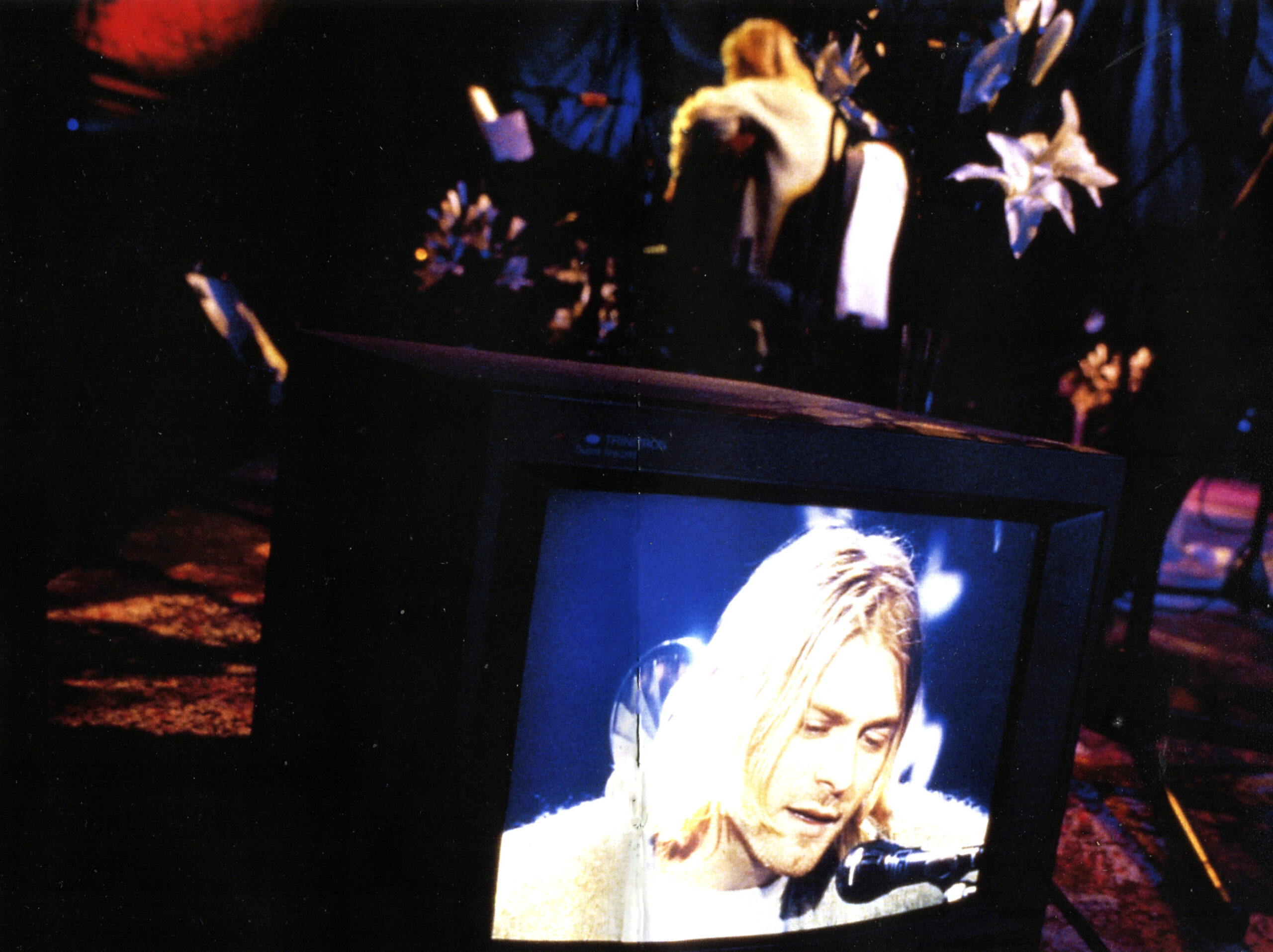
Some songs arrive by chance, just to end up reshaping music history. Nirvana’s stark take on ‘The Man Who Sold The World’—a Bowie deep cut played on an acoustic show with a disguised electric rig—wasn’t designed to be a showstopper. Yet it became one of the defining moments of the posthumous ‘MTV Unplugged In New York’ (1994), the performance many fans now see as the band’s final snapshot.
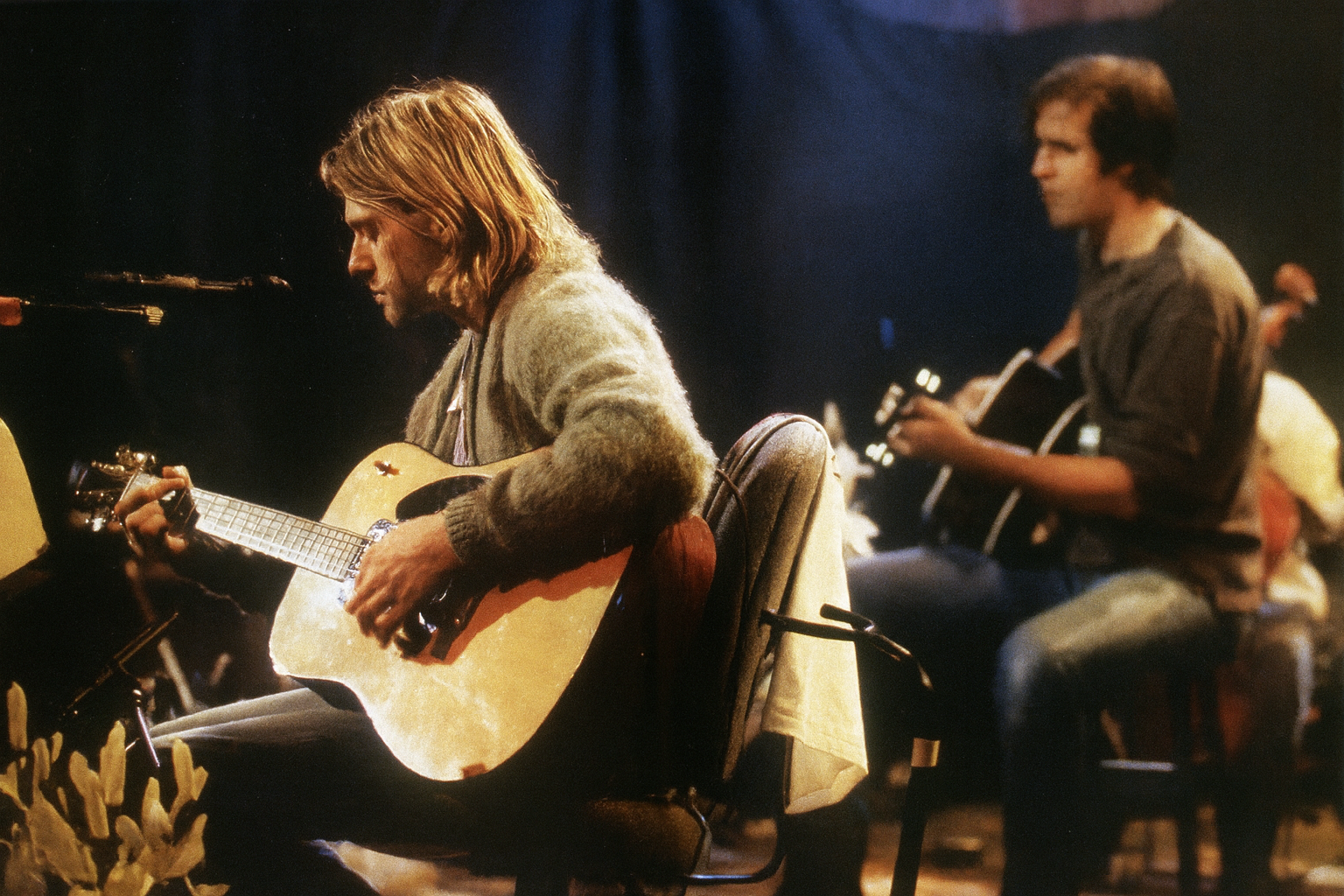
For countless reasons, that Unplugged show, recorded in November 1993, stands as one of the most iconic chapters in Nirvana’s story, and it’s impossible to separate it from what followed. Kurt Cobain died less than five months later, giving the concert a sense of premonition it was never meant to carry. It also captured a side of the band that was always there but rarely foregrounded: the mellow core beneath the wall of distortion. Most importantly, it saw the band refusing to play by the rules. MTV wanted acoustic versions of the big hits and hip guests. Nirvana instead brought out underground heroes Meat Puppets to share the stage with them, and pieced together a set of songs that suited the room: some well-known, others obscure, and a few unexpected covers. Two of these covers stood out as masterpieces. One was the heart-wrenching finale, Leadbelly’s ‘Where Did You Sleep Last Night’. The other was David Bowie’s ‘The Man Who Sold The World’, the title track of his third album, released in 1970 to little exposure—it wasn’t even issued as a single—and long overshadowed by the hits that came later. It was arguably Bowie’s heaviest work, one that drew comparisons with Black Sabbath in the press upon its release. An odd, almost esoteric choice: exactly the kind of thing the band would go for.
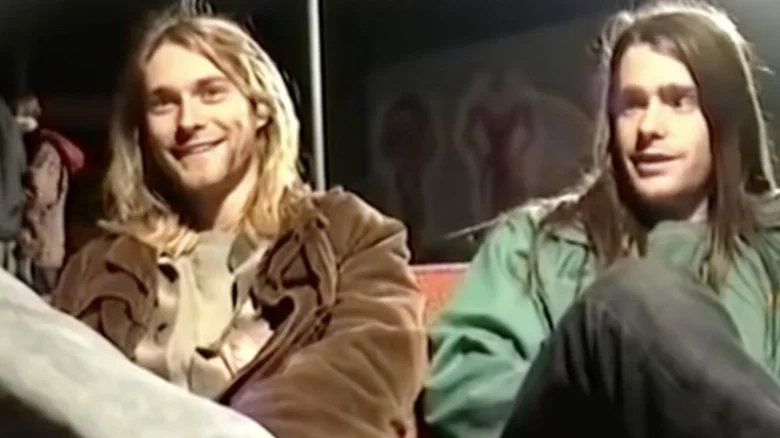
The story of how that song entered Kurt Cobain’s universe goes back to 1989, when Nirvana were touring behind ‘Bleach’, crashing on fan floors and driving around in a van filled with a chaotic mix of tapes. Chad Channing, Nirvana’s drummer on that debut album, described those days on the A Fresh Face In Hell podcast: “We had a lot of different stuff. When [former Nirvana guitarist] Jason Everman was with us, we had some NWA rolling, we had Chuck Schuldiner’s Death, stuff like that. Then we had the Pixies, ‘Surfer Rosa’. We also listened to Shonen Knife. That was one of the bands I turned Kurt and Chris onto. And we listened to a lot of Talulah Gosh and the Vaselines, which were two bands I’d never heard of, which they turned me onto.” He also remembered how the band rarely stayed in hotels: “People would come up to us after shows and say, ‘Do you need a place to stay?’ I rarely recall ever staying at a hotel… It was guaranteed that someone was going to offer us a place to stay”.
It was during one of these stopovers—after a show in Boston—that Channing’s detour into a record store earlier in the day set everything in motion. “I found a copy of David Bowie’s ‘The Man Who Sold The World’, and it had the poster insert, which was really cool. I was like, ‘Oh, I got to get this”. He dubbed it onto a cassette at whichever place they were sleeping that night: “I’d bring a lot of blank tapes with me“.
The next morning, somewhere on the road, he put the newly dubbed cassette into the van stereo. “All of a sudden, Kurt’s like: ‘Wait a second. Is this David Bowie? I’ve never heard this before’”. Channing suddenly realized Cobain wasn’t familiar with Bowie’s early work at all: “He was more used to hearing ‘Let’s Dance’, ‘China Girl’”.
Something clicked immediately. “He really, really liked that record”, Channing said. “And he liked that song especially”.
Chad’s tenure with Nirvana ended soon after, but his introduction to that album stuck with Kurt. A few years later, it appeared on his list of 50 favorite records, the one eventually published in his ‘Journals’ collection. A small detail, but one that underscores how deeply it resonated with him.
When Nirvana began preparing for the Unplugged tapings in late 1993, Kurt and guitarist Pat Smear sifted through Cobain’s record collection in search of covers that would suit the format. Pat told Playboy.com: “We were sitting in Kurt’s living room going through his record collection and he said, ‘Let’s figure out cover songs for the Unplugged thing.’ He’s like, ‘Let’s do a Bowie song. You love Bowie.’ I said, ‘Yeah,’ and we look through and I see ‘The Man Who Sold The World’ and I’m like, ‘F–k, it’s gotta be off this record.’ And we settled on ‘The Man Who Sold The World’”.
The technical setup was another story entirely. The show was supposed to be purely acoustic, but Cobain wanted his Fender Twin amp and his notoriously temperamental Martin D-18E, a hybrid instrument closer to an electric guitar than a traditional acoustic. MTV producer Alex Coletti told The Ringer: “I remember Earnie saying, ‘Look, he really wants his Fender amp on stage.’ And I was like, ‘Dude, it’s Unplugged’“. Guitar tech Earnie Bailey explained the dilemma: “The D-18E was more of an electric guitar than it was acoustic. We were walking on thin ice… using an acoustic guitar with electric pickups, through several electric guitar pedals, and into an electric guitar amp”. So the team improvised. Coletti said: “‘You know what, let’s just dress it like a monitor.’ Tom from the art department built a case around it so it looked like a monitor wedge.”
Meanwhile, Krist Novoselic was still trying to decipher the bass line. He told Bass Player: “I sat on the edge of my bed the night before the show and tried to figure out what the hell the bass was doing. I knew I couldn’t touch Tony Visconti’s bass line, so I figured out the basic elements that stand out—the bass run and those flourishes. If I could get the bass run down, it would bring it all together. I sat for a half hour and played it over and over, and I got it locked”.
Before starting the song that night, Cobain tried to lower expectations. “I guarantee you I will screw this song up”, he told the audience. When he finished, he asked, “I didn’t screw it up, did I?” Drummer Dave Grohl answered with a cheeky rim shot. Bailey later summed up the end result: “‘The Man Who Sold The World’ was unbelievable—it gave you chills”.
David Bowie eventually heard the performance and commented on it in Kurt St. Thomas’ book ‘Nirvana: The Chosen Rejects’: “I was simply blown away when I found that Kurt Cobain liked my work, and have always wanted to talk to him about his reasons for covering ‘The Man Who Sold The World’”, he said. “It was a good straightforward rendition and sounded somehow very honest. It would have been nice to have worked with him, but just talking with him would have been really cool”.
At the time, the legendary British singer was still trying to re-establish himself and find a new direction. That cover turned out to be some unexpected help. “At a stroke, Bowie was rehabilitated in a country that had treated many of his previous albums with either suspicion or disinterest”, wrote biographer Alexander Larman in ‘Lazarus: The Second Coming Of David Bowie’. “After the MTV show was broadcast on 18 December, it did more to revive interest and attention in Bowie than either of the two albums that he had released that year”.
And that’s how a Bowie song from 1970, rediscovered 20 years later in the back of a touring van through a dubbed cassette, became a Kurt Cobain favorite and finally emerged as one of the iconic musical moments of the 1990s. As Chad Channing said, almost in passing: “Had I not bought that record… kind of weird how that is”.
🟥 Song Story is a series of articles about famous hits and forgotten deep cuts, tracing their origins, detours, and legacy. A full index can be found here.